Year in Review: Connectivity and Diplomacy
Recent Articles
Author: Jack Halsey
12/29/2025

The Caspian region has had a remarkable year for international connectivity and diplomacy. Russia’s continued war against Ukraine has provided the Caspian region countries with the impetus to establish their own course. With this newfound freedom, the region has been focusing on building connections and strengthening diplomatic ties, not only with international partners, but also among themselves. In the past year, this connectivity has materialized in several veins: new or stronger strategic partnerships, the C5 (now C6) +1, and the initialing of the peace plan between Armenia and Azerbaijan.
Strategic Partnerships
Kazakhstan
Kazakhstan established itself as the top example for Central Asia’s multi-vector approach. This year, Kazakhstan government officials signed and strengthened several strategic partnership deals with Armenia, Russia, and the European Union (EU).
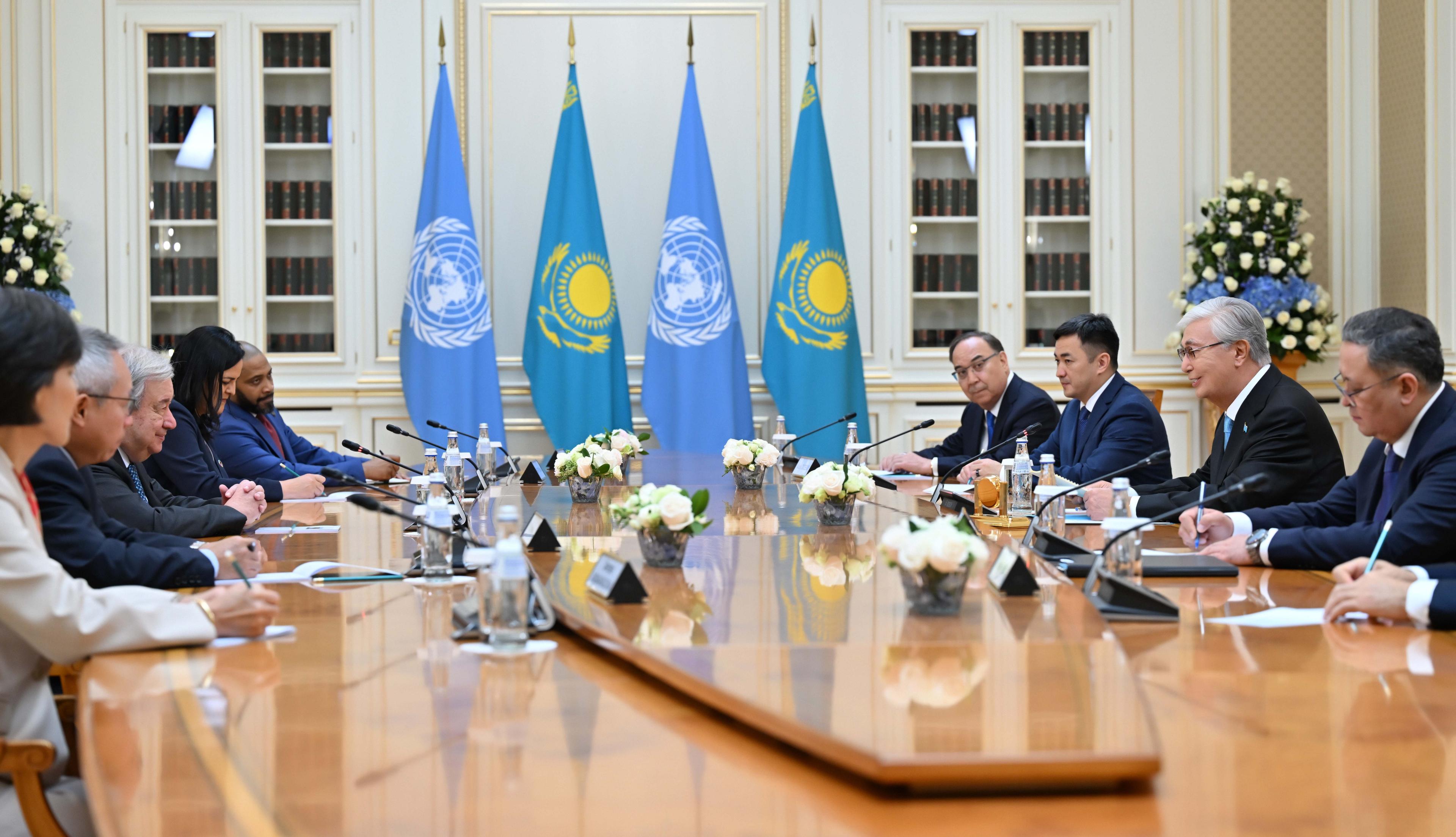
Kazakhstan and Azerbaijan further strengthened their strategic partnership. The October visit of Azerbaijan’s President Ilham Aliyev to Astana marked the 20th anniversary of the Treaty of Strategic Partnership and Allied Relations. The two countries reaffirmed their commitment to doubling trade turnover to $1 billion within the next three years, as well as tripling freight shipments from China to Azerbaijan via Kazakhstan (the Middle Corridor) by 2030. This has allowed Kazakhstan to upgrade its relations with Armenia to strategic partnership, where Kazakhstan’s President Kassym-Jomart Tokayev stated that “open and trusting political dialogue has been established between Astana and Yerevan at all levels. With Azerbaijan now allowing goods to transit through its territory to Armenia, economic prospects resulting from implementation of the Armenia-Azerbaijan peace process are enhanced.
President Tokayev also signed a “Comprehensive Strategic Partnership and Alliance” declaration with Russia. Unsurprisingly, bilateral trade between these two neighbors reached nearly $30 billion in 2024 and continued to rise in 2025, as the region’s financial tables turn and Kazakhstan’s per capita GDP is expected to outstrip Russia’s by the end of 2025. During their summit, both presidents also discussed boosting Russian gas supplies to Kazakhstan’s northern and eastern regions as well as Rosatom’s role in constructing Kazakhstan’s first nuclear power plant.
Although the initial strategic partnership with the EU was originally signed in 2015, Brussels has highlighted Kazakhstan’s Sarytogan graphite deposit as a strategic interest for investment. The EU considers the Sarytogan project as a key element in strengthening the industrial relationship with Kazakhstan, while also establishing a reliable source of critical minerals needed for the EU’s green and digital transformation. The total capital expenditure for this project is estimated to range from $62 million to $344 million.
Tajikistan
Replacing the previous Partnership and Cooperation Agreement (established in 2010), the EU and Tajikistan initialed an Enhanced Partnership and Cooperation Agreement (EPCA). This new agreement provides a modern legal framework that will support Tajikistan’s reform path. The EPCA also covers areas like sustainable economic development, digital policies, energy efficiency, and connectivity and infrastructure.
The government in Dushanbe signed a strategic cooperation agreement with the United Arab Emirates as well, covering the field of artificial intelligence. The agreement focuses on “accelerating scientific research, innovation, and the commercialization of [AI] solutions,” as well as a focus on large-scale language models.
Kyrgyzstan
Following a meeting between President of the Kyrgyz Republic Sadyr Japarov and Mongolian President Ukhnaagiin Khurelsukh, the two states signed a Joint Declaration on the establishment of a comprehensive partnership. The agreement covered a wide variety of industries including mining, connectivity, and transport and logistics. Kyrgyzstan also confirmed its intentions to support Mongolia’s economic integration with the Eurasia Economic Union.
Uzbekistan
Tashkent also signed an EPCA with the European Union this year. Similarly to Tajikistan, this agreement established mechanisms for cooperation in trade, intellectual property, energy and digital transformation, and education. The updated agreement also expands cooperation in several areas like green energy and governance.
C5+1
The Central Asian countries and the United States also celebrated their 10th anniversary of the C5+1 forum. Historically used as a platform to discuss a broad range of regional issues, this year’s forum focused heavily on securing bilateral business deals. Coinciding with the C5+1 Business Conference, the end result was the signaling of high political interest from the Trump Administration along with tangible economic deals as evidence of interest. By the end of the conference, the U.S. International Trade Administration announced the combined total of $25 billion in agreements across the region. These deals, including all of the C5 except for Turkmenistan, cover a wide assortment of industries, including infrastructure, critical minerals, agricultural, and technology.
Following this year’s forum, Azerbaijan was also invited to join, transforming the C5 into C6. By adding Azerbaijan, the original C5 states are hoping to increase communication and connection with the South Caucasus, thereby strengthening a key component of the Middle Corridor as the Caspian region continues to build economic ties to the west and to the east.
Armenia-Azerbaijan Peace Deal
It was also a momentous year for Armenia and Azerbaijan that took large steps towards peace by initialing a peace deal. The trilateral declaration, hosted by U.S. President Donald Trump in the White House, stated Armenia’s and Azerbaijan’s dedication to peace and intention to unblock commerce, transport, and communication links. During the peace summit, both states also signed bilateral strategic agreements with the United States. Possible areas of cooperation included defense, energy, trade, connectivity, and technology (including AI).
The agreement between the three countries also established the Trump Route for International Peace and Prosperity (TRIPP) that will provide Azerbaijan with full access to its exclave of Nakhchivan. Although under Armenian control, the route will be constructed by American companies and receive U.S. investment.
Although the peace deal has yet to be officially signed and ratified, there have been early signs of good faith between the two states. Several months after the initialing, Azerbaijan allowed Kazakhstan to transport wheat to Armenia through its territory. TRIPP promises a major opportunity to more than double the Middle Corridor’s freight capacity.
Regional Connectivity in 2026?
While Russia continues to be distracted by the war in Ukraine and the Central Asian states’wariness of placing all their eggs in a Chinese basket, 2025 has seen the region work to substantially diversify investments and partners. The trans-Caspian region has the attention of both the EU and the United States. with whom the countries have already crafted deals that appeal to western interests. Going forward, it will be important that regional policymakers ensure that western-invested projects are able to break ground and begin making headway. Should the Caspian region maintain the attention of Brussels and Washington, the countries of Central Asia and the South Caucasus will be better able to withstand pressure from a future Russia no longer distracted by war.